Gregor Pratneker – Svetloba, veter in nebo / Light, wind and sky (solo exhibition)
ACE KIBLA / 5. 5. 2017 – 3. 6. 2017
Gregor Pratneker – Svetloba, veter in nebo / Light, wind and sky
5. 5. 2017 – 3. 6. 2017
ACE KIBLA / KiBela, Ulica Kneza Koclja 9, Maribor
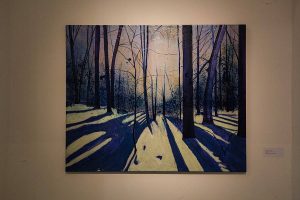
“My paintings are landscapes that twist and turn and are tossed about and split apart. Sometimes they merge into sky or water, or disappear off the edge of a cliff. Flooding is a regular occurrence. I view the painting process as a portal to my inner world, a response to environmental and global events; it has evolved out of a deep fascination with the metaphor of landscape and the extensive possibilities of oil paint. By moving the paint over and around a surface, weather and geological processes become agents of change, acting on landforms that are repositories of memory and accumulated experience. I meander through a landscape versus describing it, and capture not a moment but a process – forms, elements and events, moving and changing over time.”
– Gregor Pratneker
Gregor Pratneker is inspired by joys of nature through the human doctrine of compassion, affection, and respect. His motifs concentrate around postmodernistically depicted landscapes, which means simply that he embraces a classic artistic style and the legacy of modern European art, while at the same time, committed and uninhibited, he transcends the mere metaphoric restraints of the themes typically associated with landscape painting.
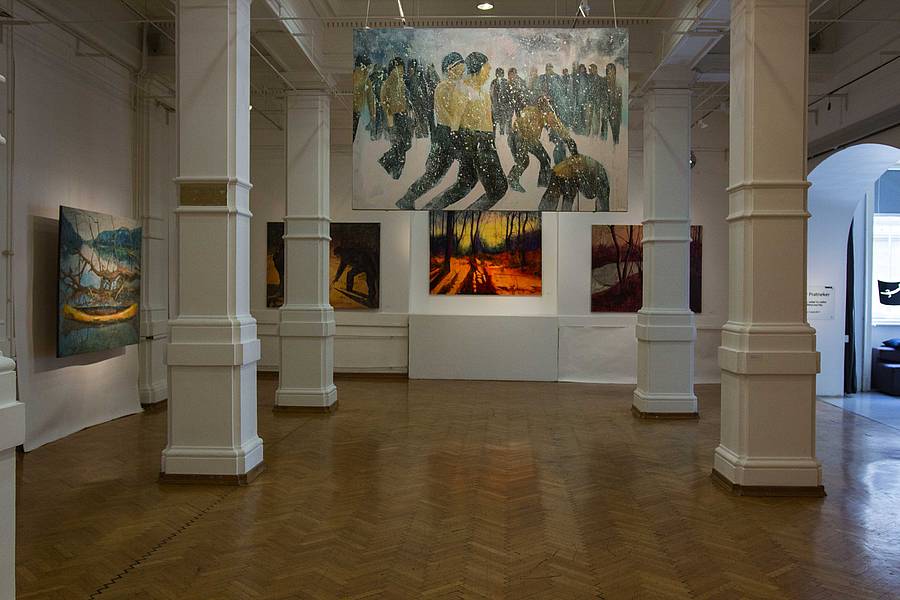
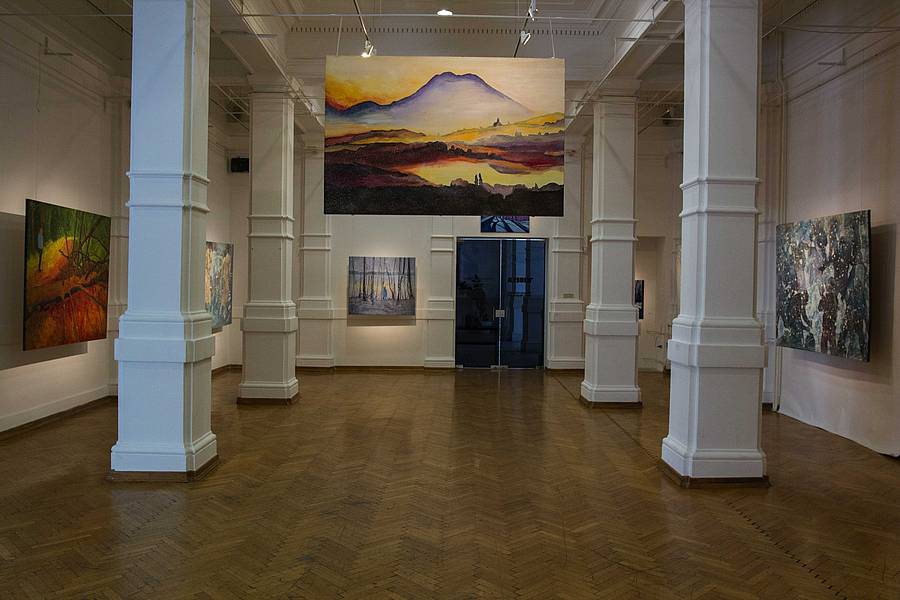
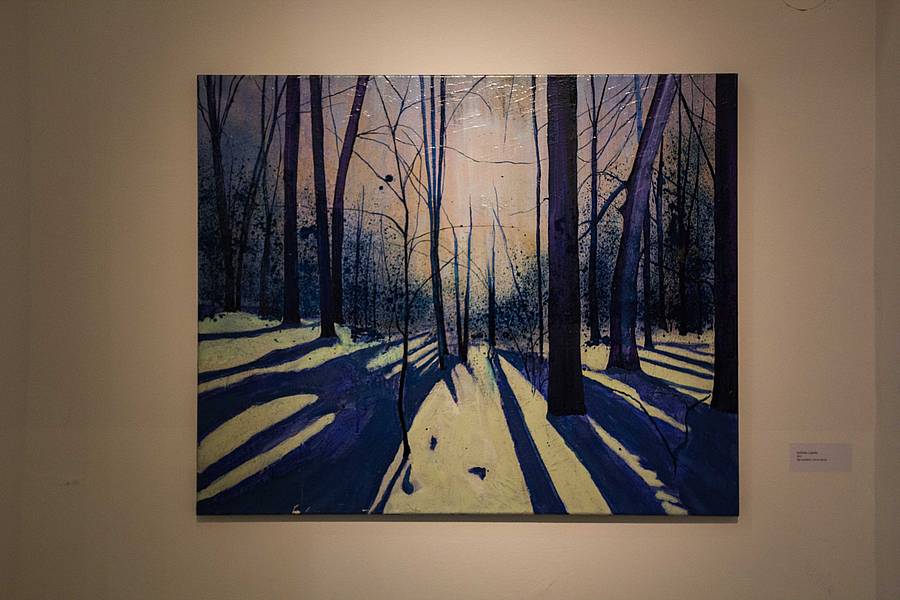
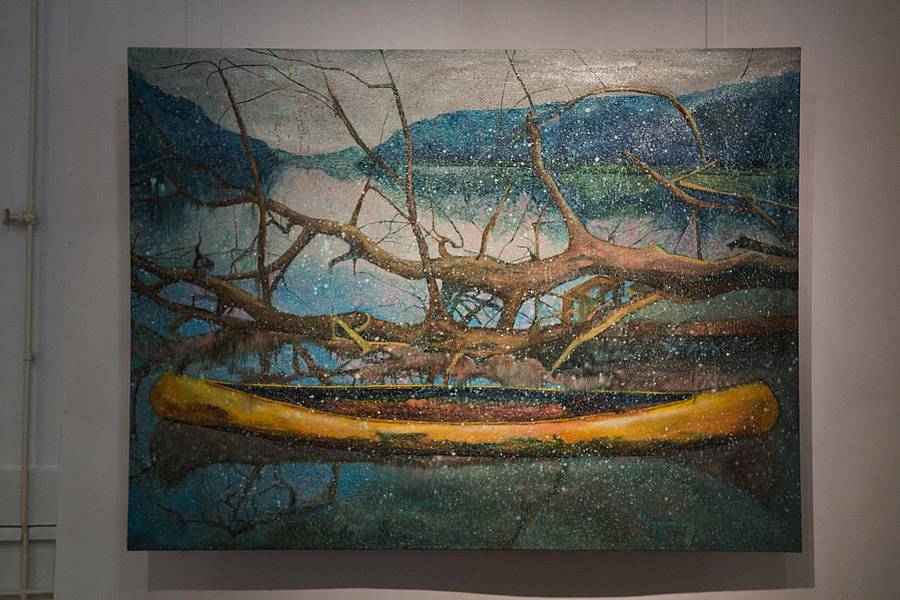
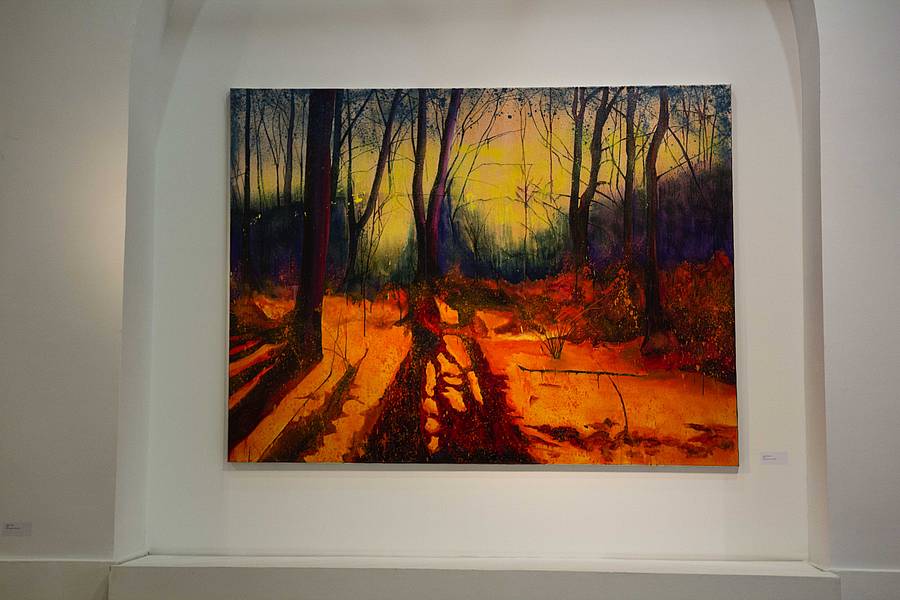
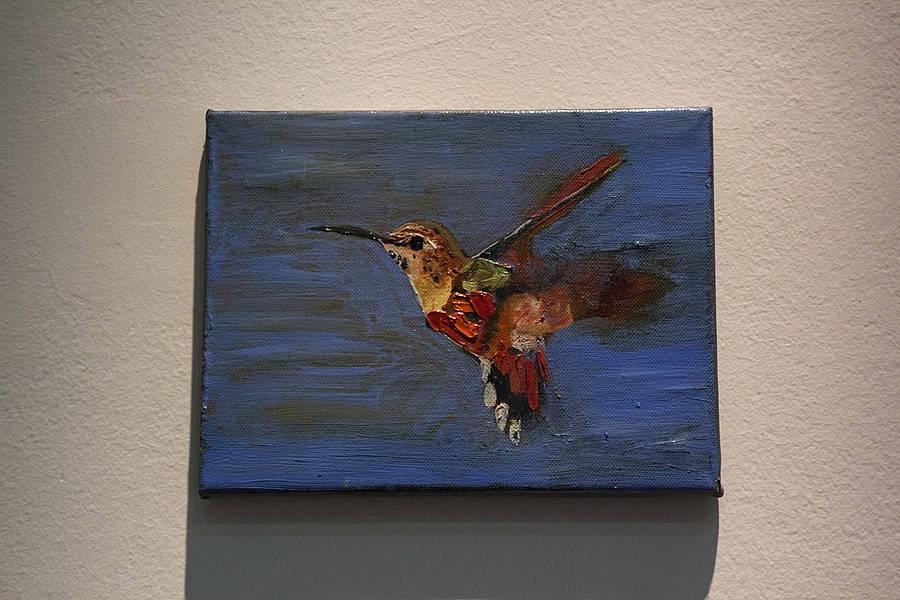
The dynamics of strokes in his paintings establish a relationship with the viewer and create a scenography for a game, which we must become part of, if we wish to truly feel the work – at least in the way it is perceived by the artist. With an exceptional feel for modeling the light, Pratneker also adds a hint of personal impression and subjectivized expressionism to the paintings. The artist’s leitmotif is landscape, portrayed with a subjectivity of the shades of light, which complement the visual character of this subtle landscape painter, and express his personal relation not only towards the moment in time, which happened in the painting “by chance”, but mostly towards the natural processes that stand behind it, serving as a mirror. Pratneker’s works exhibit a certain kind of adapted realism, though never in a cultural-historical sense, for which Pratneker has a distinct disinterest, or even less in terms of some topographical tradition. His painting expression is highly individual, deliberately refusing to follow modern painting tendencies. In terms of style, he is perhaps closest to post-impressionism, to which he constantly adds an expressionist tone. The artist indulges in creative intuition that leans against his theoretical knowledge of the fine arts, gained through the study of painting, and undoubtedly highlights the expressiveness of the sensibility to light effects. Full-toned colors coupled with the artist’s overall sophisticated mastery of painting techniques make it appear as though the landscape meanders through the observer, enforcing upon them its own dynamics and a proper rhythm, which, from an esthetic point of view, is quite irresistible.
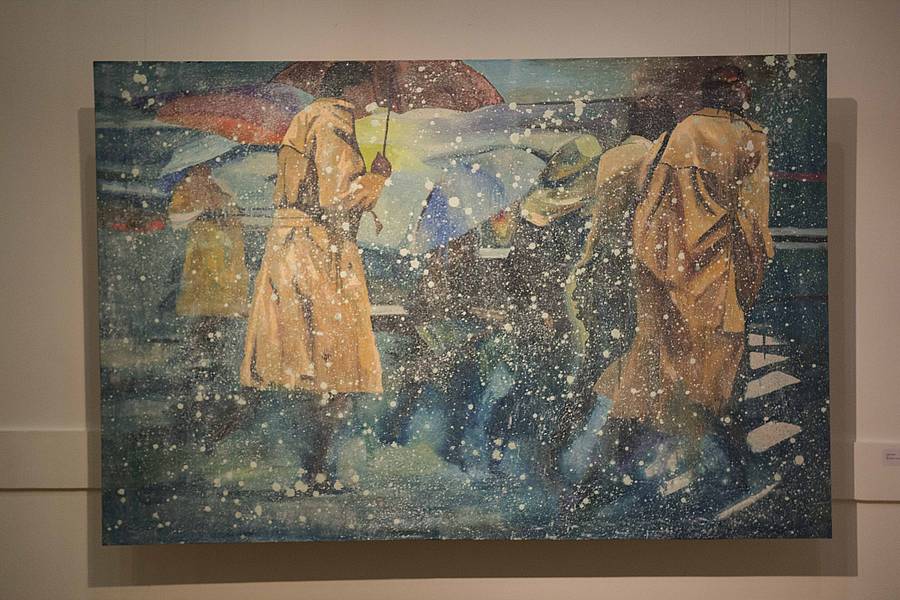
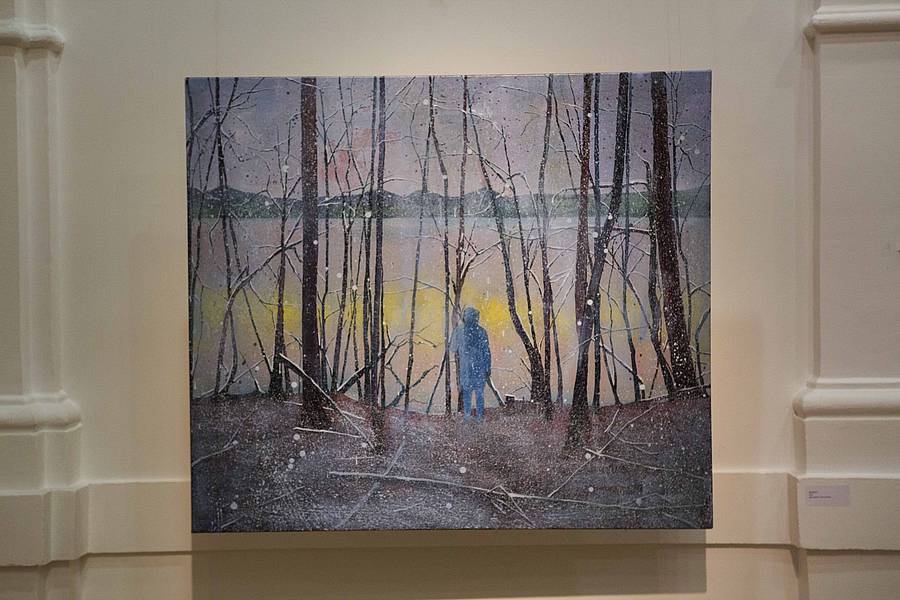
The selection of exhibited paintings features motifs of forest landscapes painted to capture the light dispersed between trees. Occasionally, water motifs occur as well, in the form of a small stream, a big river, sometimes a lake. At times, the landscapes also include a figure or a group of people, however, they always only act as symbolic details, implying the smallness of man compared to the mightiness of nature. The snowbound winter landscapes are blurred, because the foreground and the focus is painted with snowflakes, while the background lets us perceive only a blurry bustle of the people that are being pushed mercilessly by the winter landscape into the long shot and into some kind of cold background. This is where Pratneker’s painting technique is at its best: a masterly depiction of the winter atmosphere truly does make us feel as though the cold is oozing from the painting. By using a post-impressionist color palette, the artist defines the season in the painting, so that we can feel the fall, winter, spring, or summer veduta of the depicted landscape. We know that each season has its perfect moment, and the paintings of Gregor Pratneker seek to re-create that moment, that subjectivized, and thus personal impression.
The artistic style as such is of no importance to Pratneker, as he builds upon a proper knowledge of the fine arts, and a personally developed sense of esthetics, while all the while staying true to himself. His body of work is extensive; this is an artist who constantly creates, learns, and remains faithful exclusively to oil painting, which is, of course, much “slower” and technically much more challenging than its modern counterpart using acrylic paint. Thus, Pratneker stays true to a classic approach to painting and the use of traditional techniques.
Gregor Pratneker (1973) began painting in the 1990’s. He lives and works in Maribor. He paints exclusively in the oil painting technique. In 2006, he graduated from the Department of Fine Arts at the Faculty of Education in Maribor with his thesis titled “The painting vedutas of Maribor” (mentors Marjeta Ciglenečki, Anka Krašna). Between 2007 and 2012 he was a post-graduate student at the Academy of Fine arts and Design in Ljubljana, receiving his MA with the thesis “Abstracting and form deformations in my painting”. His works have been shown in several solo exhibitions both home and abroad, as well as in numerous group exhibitions and art colonies. In 2013 he received the May Salon Award and the Maribor Fine Artists’ Society (DLUM) Prize. His painting Zimsko jutro (Winter Morning) was presented at the legendary Autumn Salon in Paris in 2014. In 2015, he participated at the Salon of French Art at the Grand Palais in Paris, and in 2017 at the group exhibition The Project Room at the Bruno Massa Gallery in New York.